
Wind & Air Density
Preparation of wind speed, wind direction, air density, vertical profile and relevant extreme conditions.
Understand sites under real-world conditions
We translate site-specific wind conditions into a reliable basis for site suitability assessments, load calculations, continued operation and sound commercial decisions.
The objective
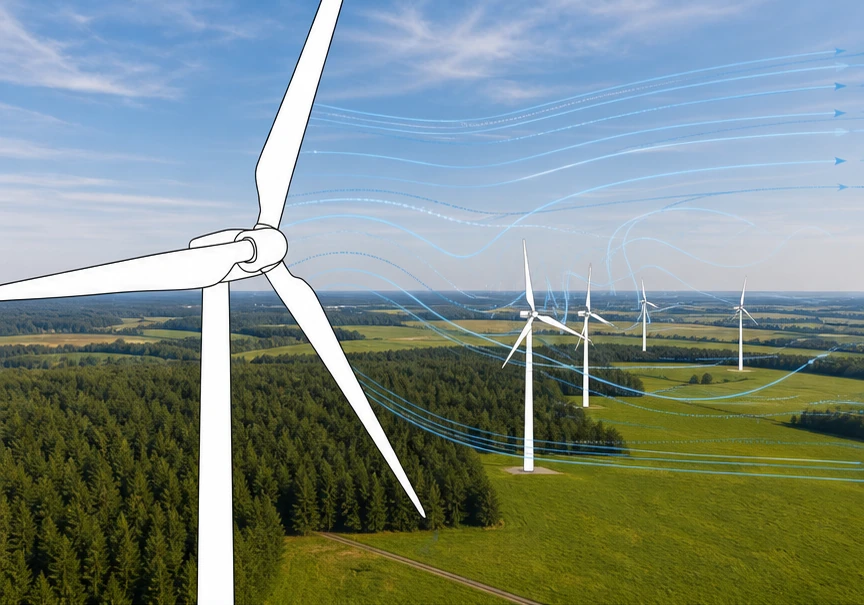
Averages alone do not determine site conditions. Wind, turbulence, terrain, neighbouring turbines and operating strategy interact. Our project-specific analyses capture these influences and make their effects transparent.
Scope of services
We combine the modules to suit the project phase, from a focused individual assessment to an integrated analysis.
Preparation of wind speed, wind direction, air density, vertical profile and relevant extreme conditions.
Site-specific assessment of turbulence and its significance for loads, suitability and continued operation.
Modelling of wake effects from existing and planned turbines and their potential mutual influence.
Consideration of topography, roughness changes, obstacles and complex site conditions.
Technical assessment as a robust basis for permitting and planning processes.
Site data as input for load comparisons and the assessment of reserves in existing turbines.
Project process
We review turbine, site and operating data and clarify open assumptions at an early stage.
Wind field, turbulence, terrain and wake influences are combined in a consistent model.
We examine the current situation, planning variants and relevant operating or shutdown scenarios.
Results are documented clearly and translated into specific courses of action.
What you receive
Missing data is not an obstacle. We identify gaps early and agree appropriate substitute assumptions or additions with you.
Frequently asked questions
As early as possible once the wind-farm layout and turbine types are sufficiently defined. This allows the findings to inform planning, permitting and operating strategy.
Yes. A site-specific assessment of existing turbines is particularly important for continued operation, repowering and new neighbouring turbines.
The identified wind and turbulence conditions provide the site-specific boundary conditions for comparing design loads with site loads.
Next step